
Model 430
Brushless Slip Ring
Four Conductor
Amps: 2@4A and 2@30A
Volts: 250
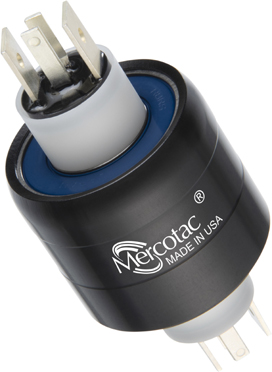
The Mercotac® model 430 is ideal for heated roller applications that need both a connection to sensitive thermocouple signals and for powering the heating elements. It’s also a great choice for compact, low-cost, and reliable slip rings that can handle both signal and power connections in robotics, medical equipment, or packaging machinery.
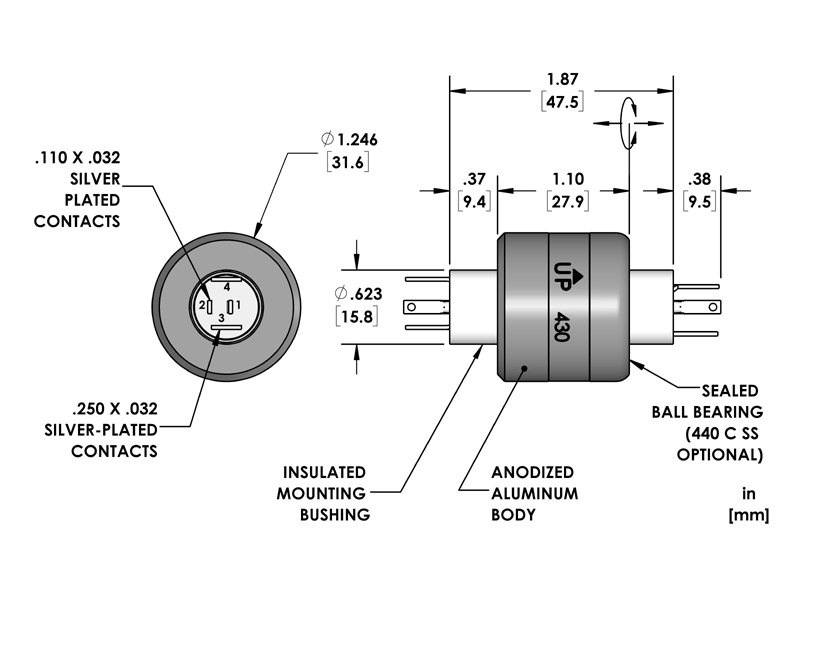
Model 430 Specifications
| Model Number | No. of Conductors | Body Material | Bearing Type | Max. Rotational Torque (gf-cm) |
Max. Voltage Rating (AC/DC) |
Max. Current Rating (Amps) |
Max. Rotational Speed (RPM) |
Operating Temperature °F (°C) max./ °F (°C) min. |
Max. Frequency (MHz) | Contact Resistance (mΩ) |
Circuit Separation (MΩ) |
| 430 | 4 | Anodized Aluminum | Chrome Steel | 400 | 250 | 2@4 & 2@30 |
1200 | Min -20 (-29) Max 140 (60) |
100 | <1 | >25 |
| 430-SS | Stainless Steel |
- “SS” designator indicates stainless steel ball bearing (recommended for wet or corrosive environments)
Model 430 Accessories
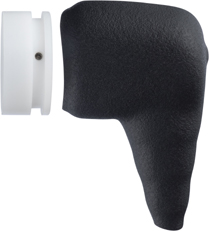
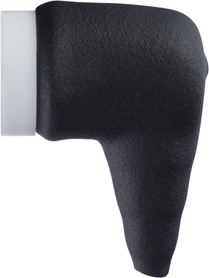
57430
Boot Kit Parts
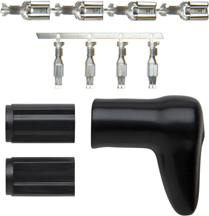
57430
Boot Kit Assembled
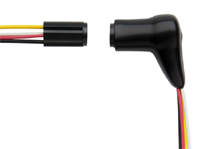
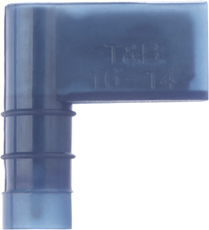
55251
Large Flag Disconnect, Insulated
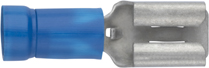
55252
Large Straight Disconnect, Non-Insulated
57430
Boot Kit Parts
57430
Boot Kit Assembled
55251
Large Flag Disconnect, Insulated
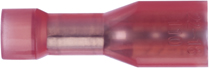
55252
Large Straight Disconnect, Non-Insulated
Other Disconnects
Disconnects for other wire gauges are available and can be substituted for the standard disconnects(22-18 AWG and 12-10 AWG). See Ampacity Table
Model 430 Connections
Model 430 Standard Wire Connections
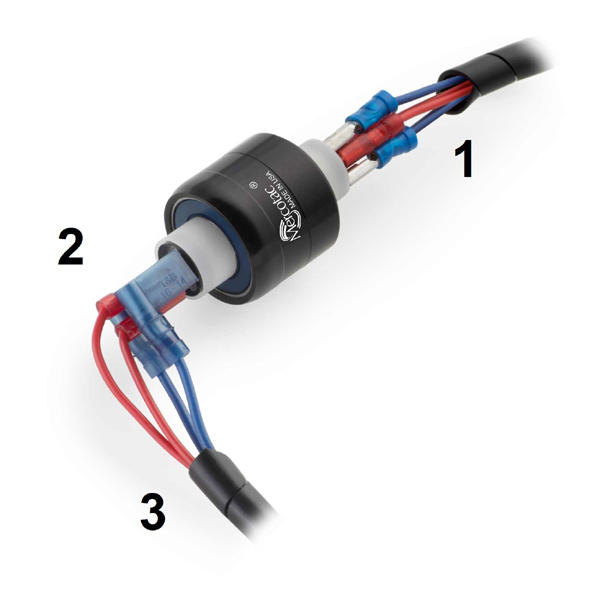
- Wire connections, mounted inside rotating shaft.
- Stationary end showing standard wire connections.
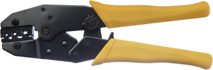
- Wires crimp to terminals. (Suggested tool: Thomas & Betts #WT 112M)
Model 430 Wire Connections with Optional Boot Kit
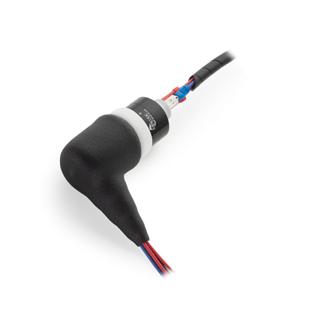
Wire connections, mounted inside rotating shaft.
Stationary end showing optional boot kit.
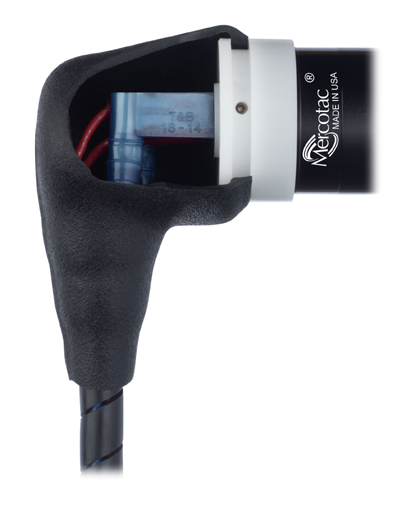
Cutaway view.
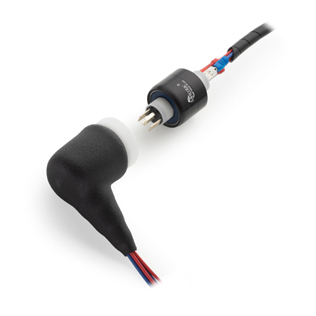
Wire connections, mounted inside rotating shaft.
Stationary end showing optional boot kit.
Model 430 Wire Connections with Optional Quick Connect Plug
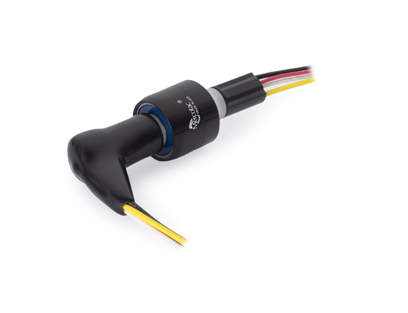
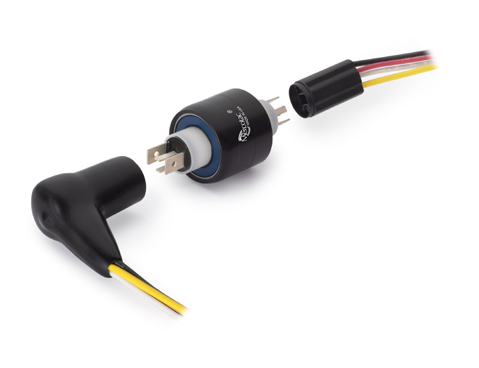
Stationary end. Plug body inside rubber boot.
Rotating end. Plug body fits inside rotating shaft.
Benefits:
- Quick and easy 430 installation
- Eases terminal orientation and correct wiring
- Pulling on wires won’t loosen plug connection
- Safely releases by pulling on plug body
- Eliminates risk of electrical shock
Features:
- Fits Models 430 and 430-SS
- Rated at 250 V AC/DC up to 20 Amps
- Includes Plugs for both ends of a model 430
- Includes protective vinyl elbow boot for stationary end
- Available assembled with wires (Plug Assembly # 50431) or as a kit without wires (Plug Kit # 50430)
- Crimp Tool for attachment of Kit 50430 to your wires (14 Awg and 18 Awg) Order Part # 5030-T
Model 430 Suggested Mounting Methods
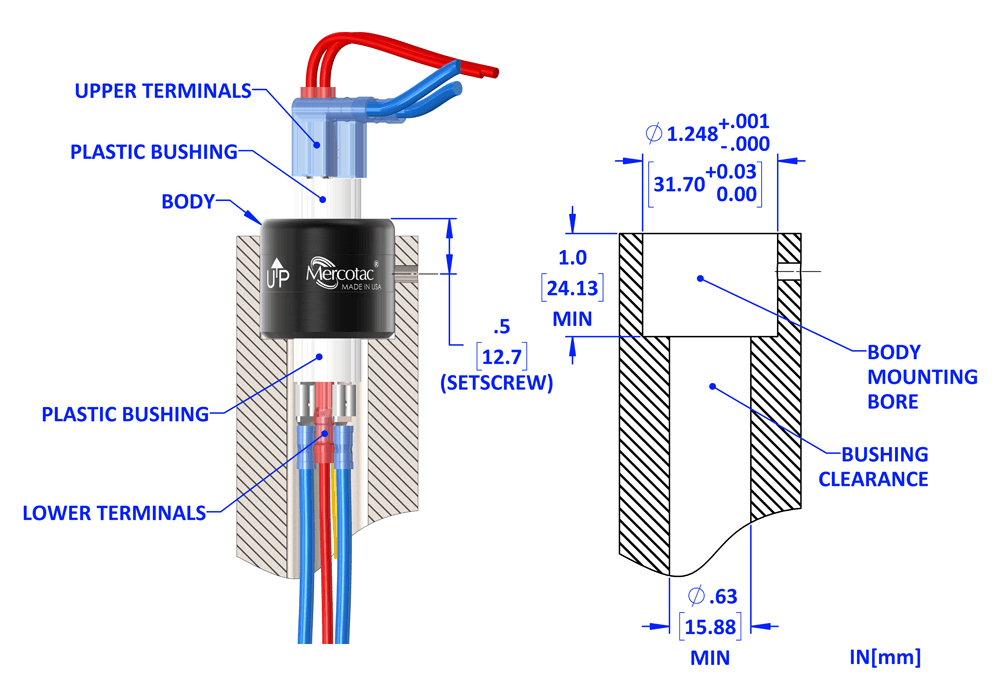
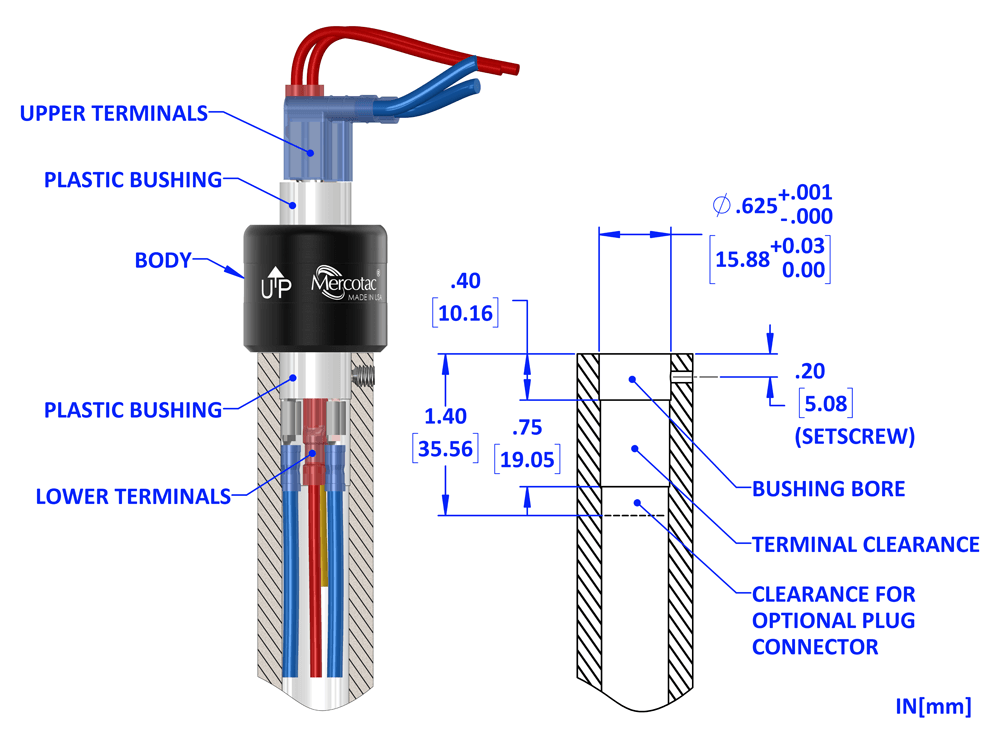
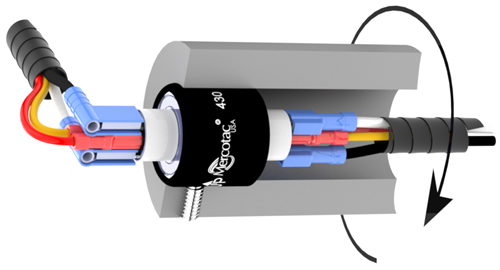
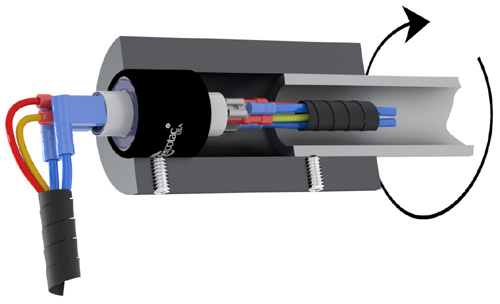
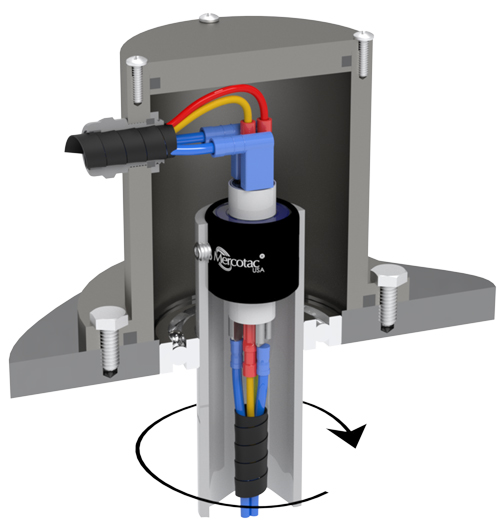
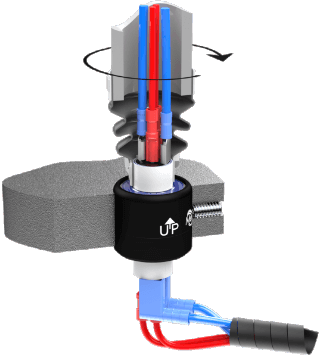
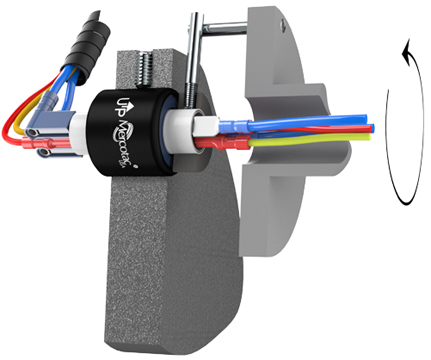
Model 430 is typically mounted by either the black body or the white plastic bushing on either end using a set screw or split clamp. When used horizontally, mount the Mercotac so the body of the connector rotates.
Body Mount
Brushing Mount
Horizonal Mount to Body
Good mounting method (but vertical orientation is better)
Adaptor Mount to Body
Use when the shaft diameter is smaller than the body of the Mercotac
Horizonal Mount to Bushing
Used if the shaft cannot be fitted to the body diameter.
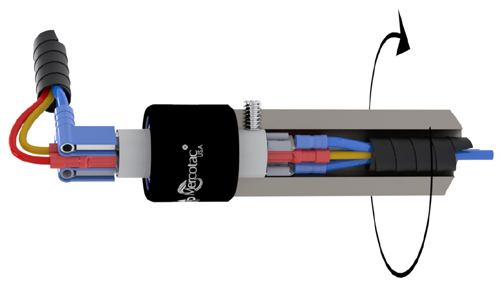
Thermal Insulated Mount to Bushing
May be needed if thermal insulation is necessary. Used if the shaft cannot be fitted to the body diameter.
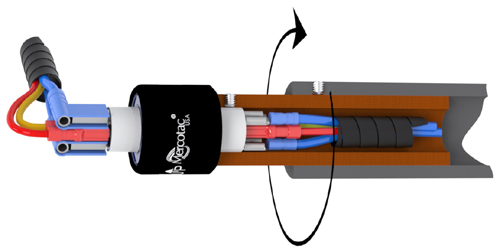
Top Mount to Body
Best mounting method.
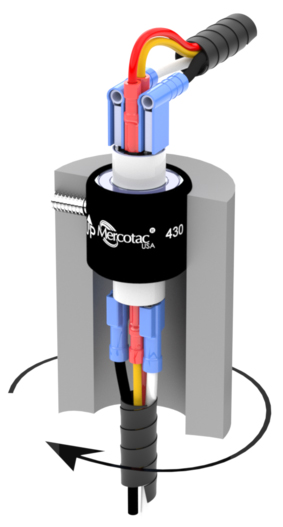
Bottom Mount to Bushing
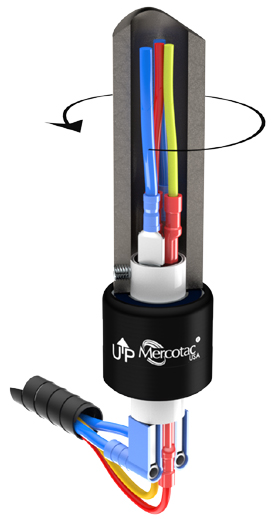
Floating Torque Arm Mount to Body
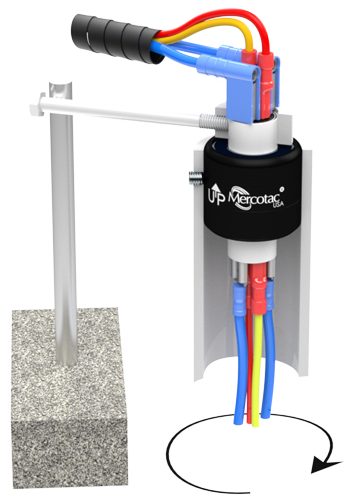
Protective Housing Mount to Body
Recommended for wash-down or dirty environments. Also recommended for food processing .
Vibration Isolation Mount to Body
With flexible bellows.
Vibration Isolating Mount to Body
With floating drive coupling.
Installation Notes:
- The up arrow should not point below horizontal.
- Do not solder to or bend terminals.
- Avoid lateral forces and mechanical loads (overly stiff or tight wires).
- Do not rigid mount both ends of the Mercotac.
- Limit the mounting eccentricity (runout / wobble) to .005″ (.13mm).
- Provide overload protection within the circuit.
- Avoid vibration and bumping motions.