
Model 110T
Brushless Slip Ring
One Conductor,
4 or 10 Amp
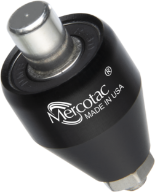
Model 105
Brushless Slip Ring
One Conductor,
4 or 10 Amp
The Mercotac® models 110-T and 105 brushless slip rings are used to provide reliable shaft grounding solutions, making them highly suitable for HVAC and VFD motor shaft grounding applications These models ensure efficient electrical grounding, minimizing the risk of costly bearing damage and enhancing overall system performance. The model 110-T is also used in low current plating and welding applications. Typically the model 105 is used in higher rpm applications. These slip rings excel in industries such as electroplating, automation machinery, mineral processing, and welding.
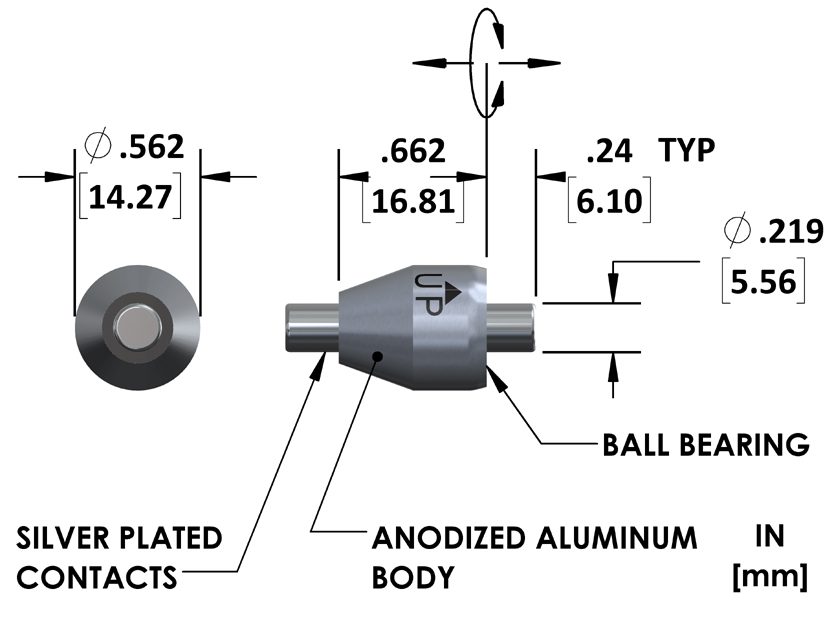
Model 110T & 105 Specifications
| Model Number | No. of Terminals | Body material | Bearing Type | Max. Rotational Torque (gf-cm) |
Max. Voltage Rating (AC/DC) |
Max. Current Rating (Amps |
Max. Rotational Speed (RPM) |
Operating Temp. Min °F (°C) Max °F (°C) |
Max. Frequency (MHz) | Contact Resistance (mΩ) |
Circuit Separation (MΩ) |
| 110-T | 1 | Anodized Aluminum | Chrome Steel | 35 | N/A | 10 | 3600 | Min -20 (-29) Max 140 (60) |
200 | <1 | N/A |
| 110-TS | Stainless Steel | ||||||||||
| 110-TL | Chrome Steel | 10 | 1200 | ||||||||
| 105 | Chrome Steel | <10 | 4 | 7500 | Min 45 (7) Max 140 (60 |
||||||
| 105-SS | Stainless Steel |
“T” designator indicates standard model (receptacle mount)
“TS” designator indicates stainless steel ball bearing (recommended for wet or corrosive environments)
“TL” designator indicates low torque
“SS” designator indicates stainless steel ball bearing (recommended for wet or corrosive environments)
Note: The body of the 110-T / 105 series Mercotac is electrically “hot” to the internal conductor
Model 110T & 105 Accessories
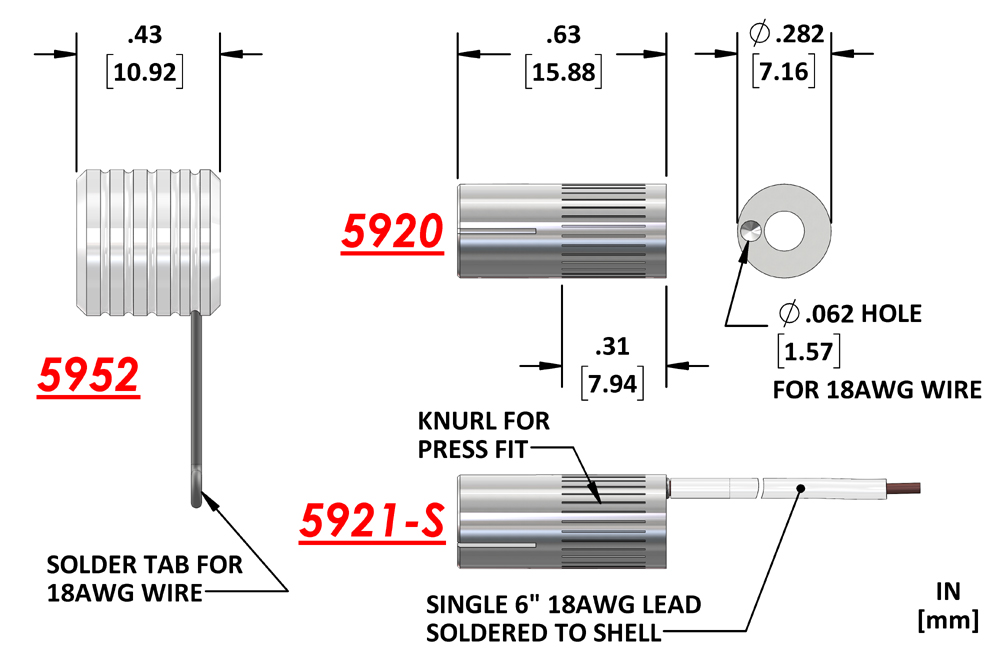
5920
one contact receptacle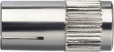
5921-S
one contact receptacle w/ 6″ wire
55337
ring terminal (12-10 AWG)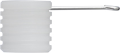
Receptacle used for mounting to rotating device.
Accessories are required for wire connections. Order Separately
Model 110T & 105 Connections
Model 110T & 105 Standard Wire Connections
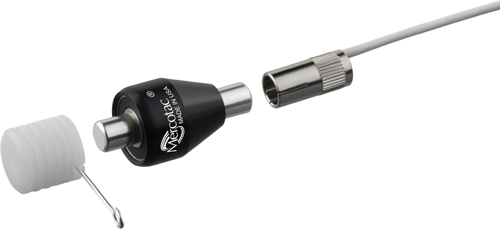
Metal receptacle press fits into rotating member of machine.
Plastic cap with solder lug to attach stationary wire.

The Mercotac unit plugs into the receptacle after the receptacle is press fit into the rotating member of the machine.
The Mercotac unit plugs into the receptacle after the receptacle is press fit into the rotating member of the machine.
Model 110T & 105 Suggested Mounting Methods
Models 105 & 110T are typically mounted by either the black body or the contact on either end. Body mount typically uses a set screw or split clamp. Contact mount is held in the installed receptacle by a spring fit. It is best to mount the Mercotac so the body of the connector rotates
|
Receptacle Mount Hole Dimensions |
|||
| MODEL | HOLE DIAMETER (Ø) * | DEPTH | |
| 5920, 5921-S | .283″ (7.19) | .35″ (8.89) | |
| *Inch (mm) Tolerance Ø | +.001″ (+.025) | ||
| -.000″ (-.000) | |||

Top Mount with Conductive Shaft
Preferred mounting orientation.
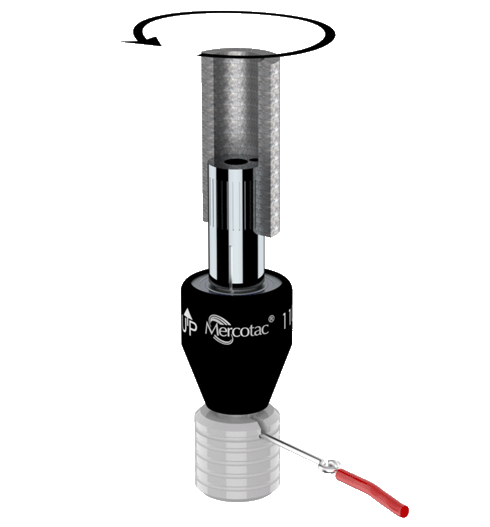
Bottom Mount with Conductive Shaft
The Mercotac body is electrically hot. An electrically insulated shaft can isolate it, if needed.
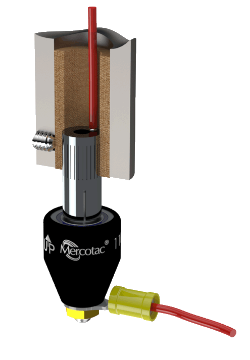
Horizontal Mount with Conductive Shaft
The Mercotac body is electrically hot.
An electrically insulated shaft can isolate it, if needed.
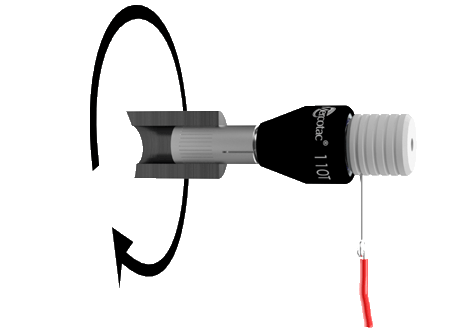
Thermal & Electrically Insulated
Horizontal Mount
Use if electrical and thermal insulation is needed
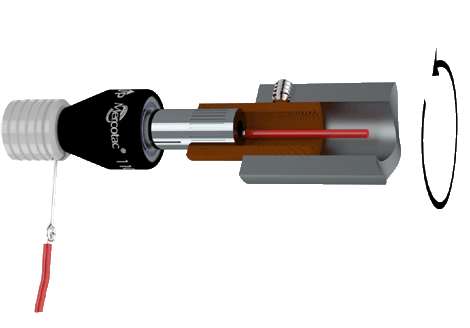
Vibration Isolating Mount

Protective Housing Mount with Conductive Shaft
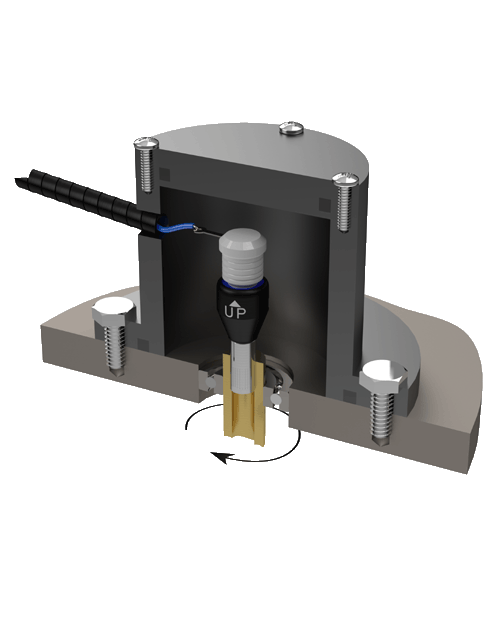
Installation Notes:
- The up arrow should not point below horizontal
- Do not solder to or bend connector tabs
- Avoid lateral forces and mechanical loads (overly stiff or tight wires)
- Do not rigid mount both ends of connector
- Limit mounting eccentricity (runout / wobble) to .005″ (.13mm)
- Provide overload protection within the circuit
- Avoid vibration and bumping motions